Skydiving Safety: What You Should Know
Tandem Skydiving


If you’re thinking about skydiving for the first time, you probably have the same question that we hear from just about everyone who comes to us to make their first jump: is it actually safe to jump out of an airplane?!
Is Skydiving Safe?
Skydive Key West has been in business since the early 1980s and we have an unblemished safety record.
Our perfect safety record is due to a lot of factors: our state-of-the-art and meticulously maintained equipment, our sole focus on tandem skydiving – which is the safest way for a first-time jumper to experience the sport, and, most importantly, our expert and highly trained staff members who are 100% committed to our culture of safety and excellence.
Here’s everything you need to know about skydiving and safety at Skydive Key West.
Skydiving: A Life-Changing Experience Meets a Highly Regulated Industry
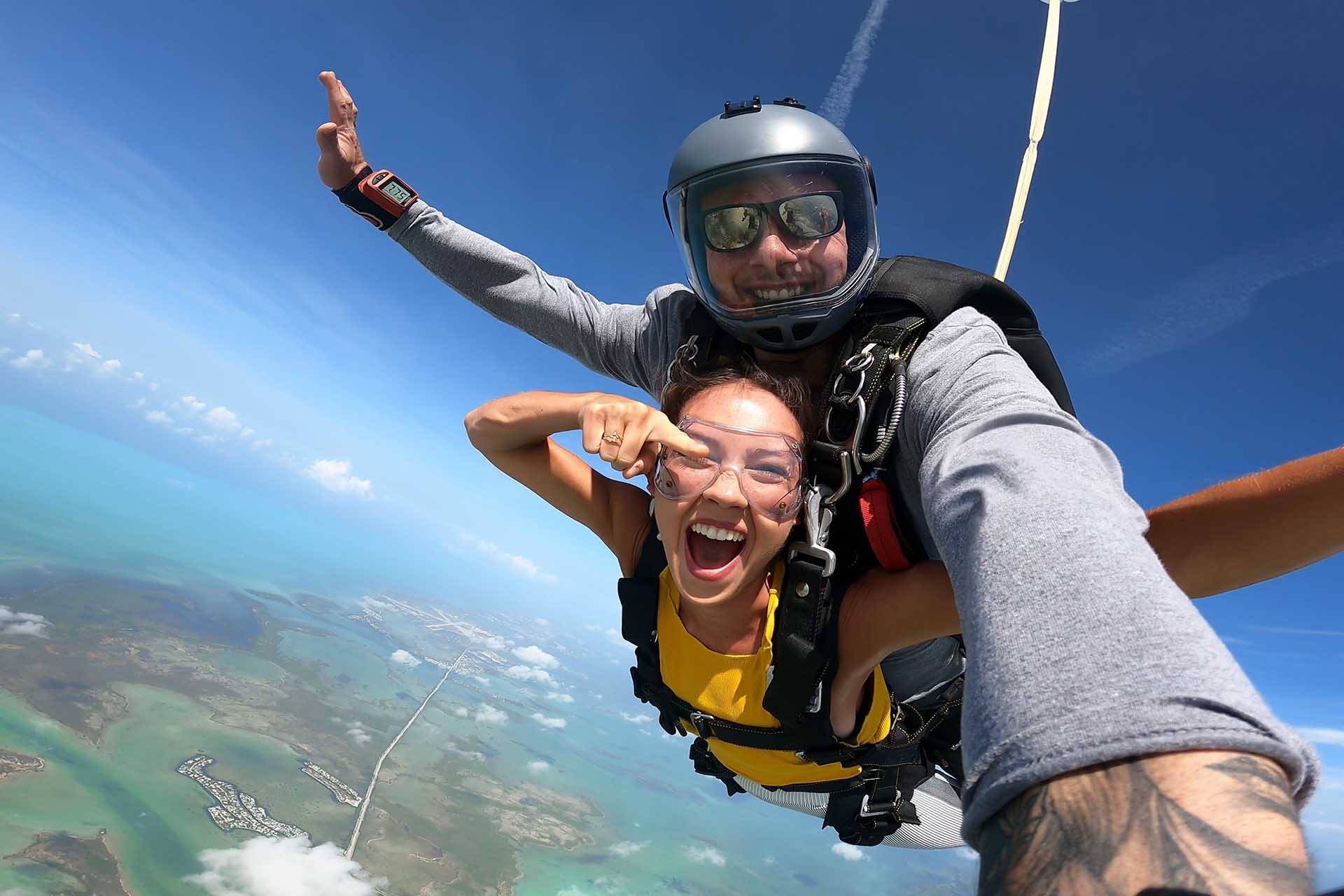
Skydiving at Skydive Key West is unlike any other experience. Here you get to live the dream of human flight in one of the most beautiful settings on earth.
With all that adrenaline pumping, it can be easy for a student to forget that Skydive Key West is a business – and we’ve stayed in business for decades by providing consistently amazing and reliably safe experiences to our customers.
Skydiving is a highly regulated, carefully controlled, and closely monitored industry. Safety drives all aspects of the experience, from gear preparation and the flight up to altitude to the jump itself and tiptoe-soft landing. The instructor training and certification process is lengthy and comprehensive, equipment maintenance requirements are rigorous, and detailed record-keeping is the standard operating procedure.
Just the Facts: Skydiving’s Overall Safety Record Keeps Getting Better
Because skydiving has become so popular in the U.S. with millions of people jumping every year, there’s a lot of data around skydiving and safety. The keeper of all that data is the United States Parachute Association, the sport’s governing body that keeps constant watch over the industry’s safety record.
The USPA’s safety data shows consistent improvement over the past twenty years, even as the yearly number of jumps has continually increased. For 2021, USPA records show only 10 U.S. skydiving fatalities out of roughly 3.6 million jumps.
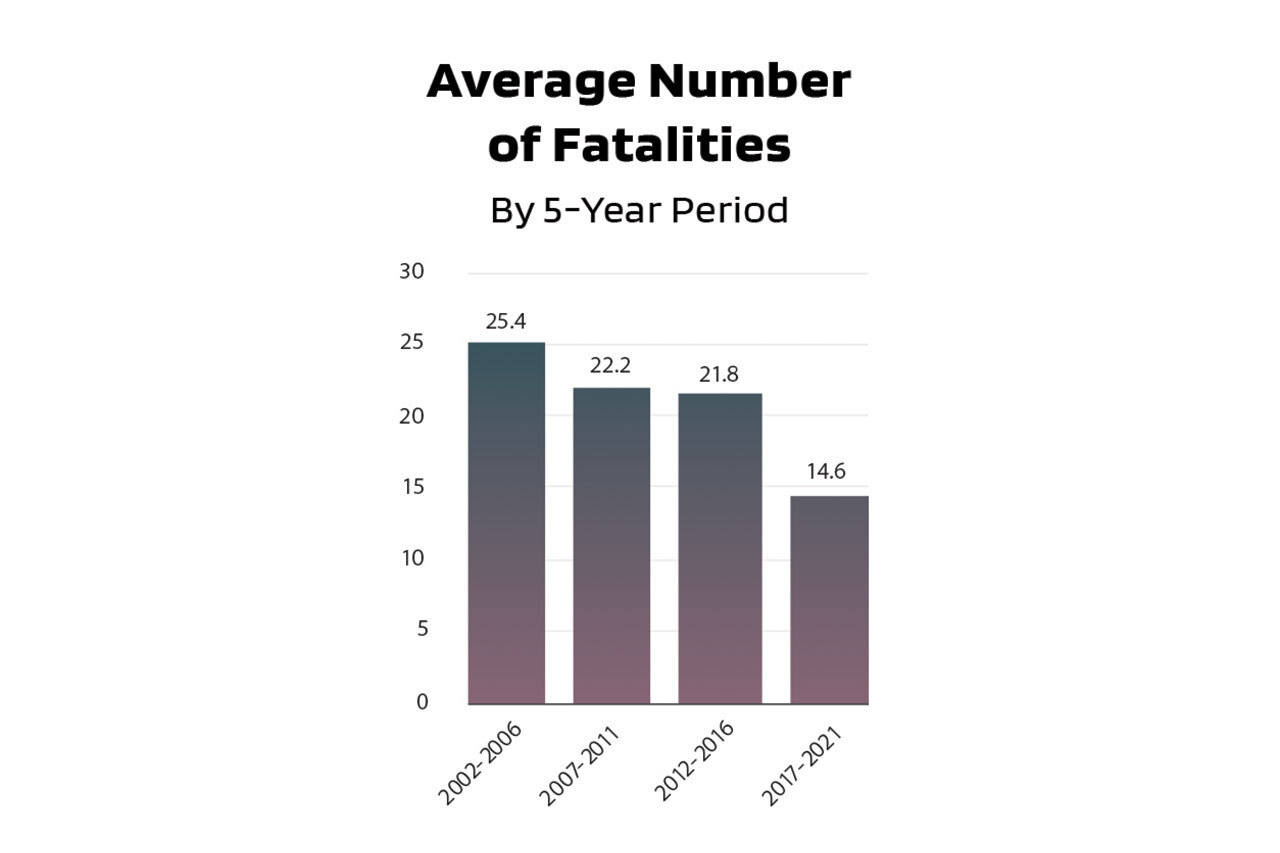
If you’re curious about the latest stats, the USPA has current safety information available on their website.
Skydive Key West Specializes Only in Tandem Skydives – the Safest Form of the Sport
It’s important to keep in mind that the vast majority of skydiving accidents occur when skydivers are jumping solo and attempting advanced maneuvers with high-performance equipment. Or when they’re taking chances that are simply never part of the experience at Skydive Key West. Here, every student jumps with one of our highly experienced instructors who’s committed – and highly motivated! – to get you both on the ground safely.
Simply put, you’re more likely to be killed by a lightning strike, bee sting, or dog bite than by a skydive. Statistically, it’s far more deadly to drive to work each day. Though there will always be a risk to skydiving, the reward that’s waiting on the other side – the immense feeling of accomplishment when you touch down after your first jump – can truly be life-changing.

Tech-driven Innovations Have Made Skydiving Gear Safer Than Ever
Skydiving equipment technology has advanced dramatically over the years, and at Skydive Key West we invest in top-of-the-line gear that we replace every single year. That’s not required by the USPA, but it’s the commitment we choose to make with our own dollars to ensure that every student has the absolute best equipment for their skydive.
Federal Aviation Administration regulations require tandem parachute rigs to be equipped with main and reserve parachutes as well as an Automatic Activation Device – a small computer that measures descent rate and altitude to deploy the reserve parachute at a safe altitude no matter what happens. Think of it as triple redundancy to get you down safe!
The chute containers, main harness, and passenger harness have been designed, built, and tested for safety and comfort. Many rig refinements come from military research and development work, where gear is put under stress in the toughest possible conditions. Skydive Key West uses only the best equipment from United Parachute Technologies, one of the original inventors of the tandem skydiving rig, and all tandem gear is inspected thoroughly and regularly.
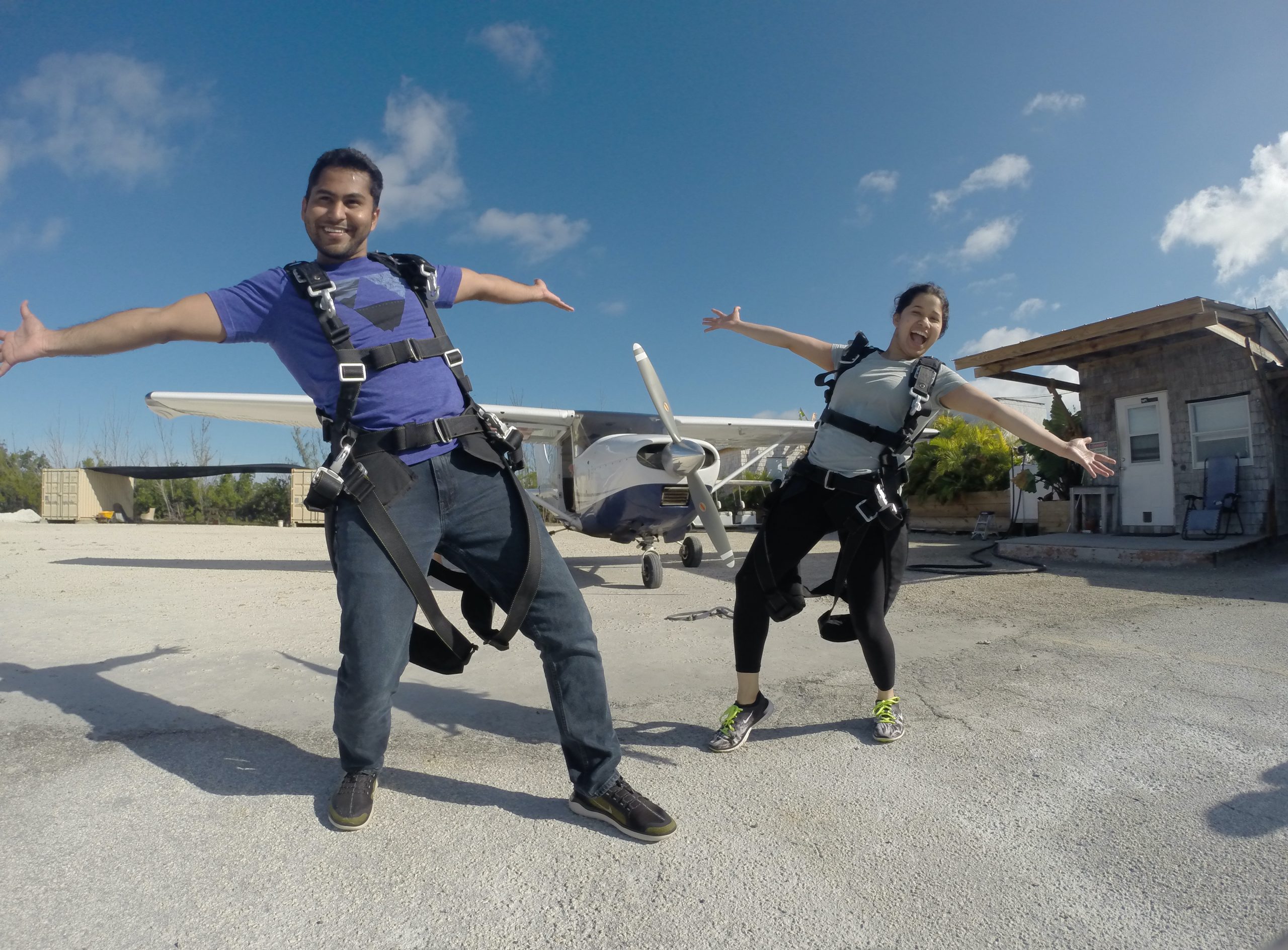
Each Part of Your Skydive Key West Experience is Built to Maximize Your Safety
Expert, highly trained staff: Our Skydive Key West team brings decades of experience and a highly personal commitment to safety to work with them each day. They’re the reason for our perfect safety record.
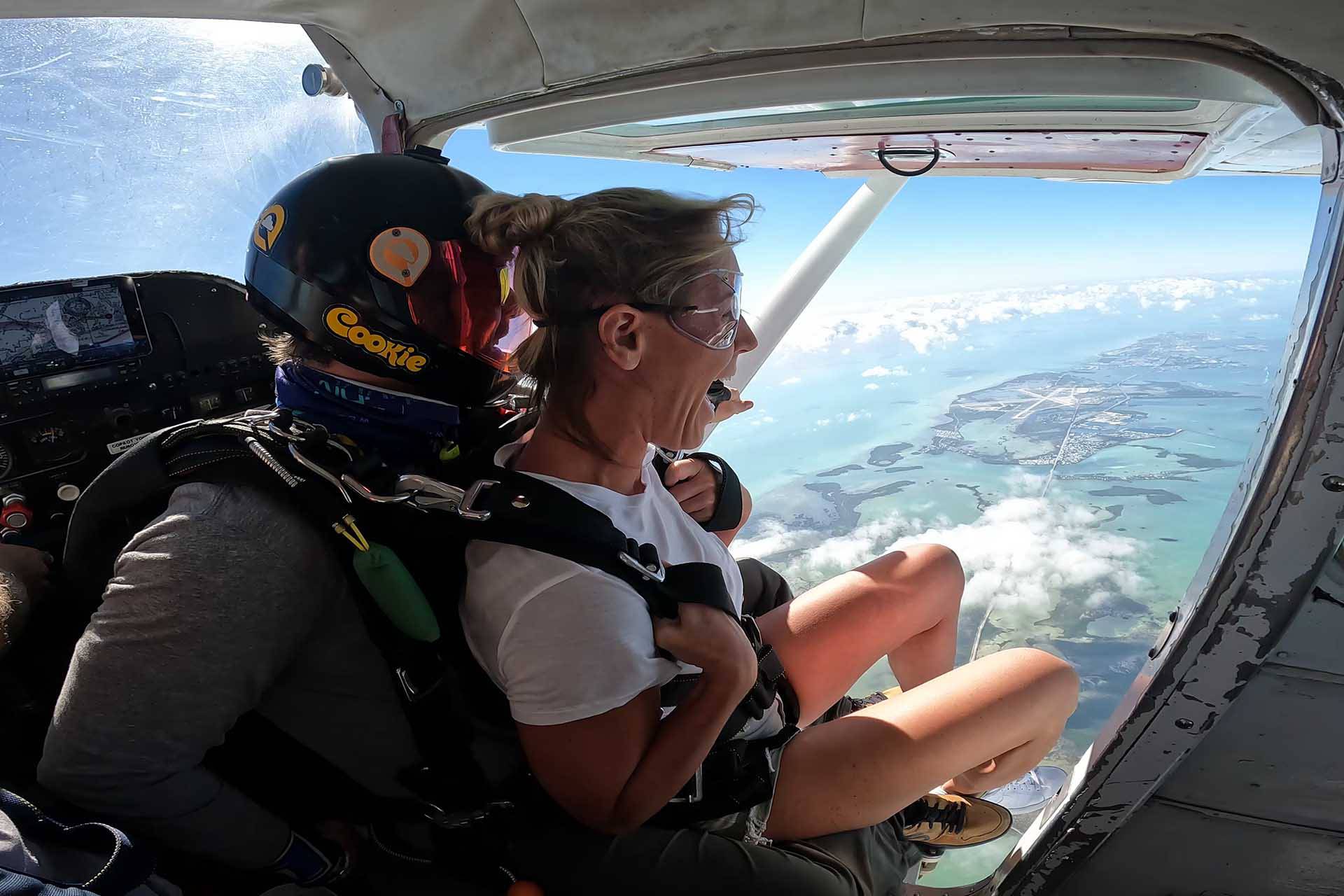
New, top-of-the-line equipment: We provide only the best, highest-rated skydiving equipment to each of our students. Our tandem harnesses are designed to maximize your comfort as well as your safety, so you can simply relax (post-free fall, that is!) and take in the stunning views of the Keys.
Safety briefing and training: The first thing we’ll do after getting you checked in is give you a detailed safety briefing so that you know exactly what to expect from each moment of your jump.
Weather: The Florida Keys are famous for their near-everyday sunshine, but every once in a while stormy weather comes our way. We will never jump in conditions that could compromise the safety of your skydive, including rain, heavy clouds, or gusty winds. The good news is that bad weather is rare, and it tends to move through quickly. In the rare instance that weather does get in the way of your planned jump time, we can often reschedule for a different time that same day when the conditions improve.
Ready to Make the Leap?
Millions of people have found that the high reward/low risk ratio of tandem skydiving makes the experience a must-do. Whether it’s a bucket list item or you want to experience the possibilities of a great new hobby, skydiving in the U.S. does not get better than a tandem skydive over the Florida Keys.
Step up and sign up for your adventure of a lifetime with a tandem skydive at Skydive Key West. Call 305-396-8806 or email [email protected] to set up your jump!